Stretch Marks on Breasts During Pregnancy: What to Expect
The breasts are often the first place to change — before the belly, sometimes before the test. They grow quickly in the first trimester, and that speed is exactly what produces stretch marks.
Why there
Rapid growth stretches the skin faster than it can adapt. The breasts can gain one or two cup sizes in a few months. The lines usually appear on the upper and outer part, and they are often the first ones you notice.
What helps
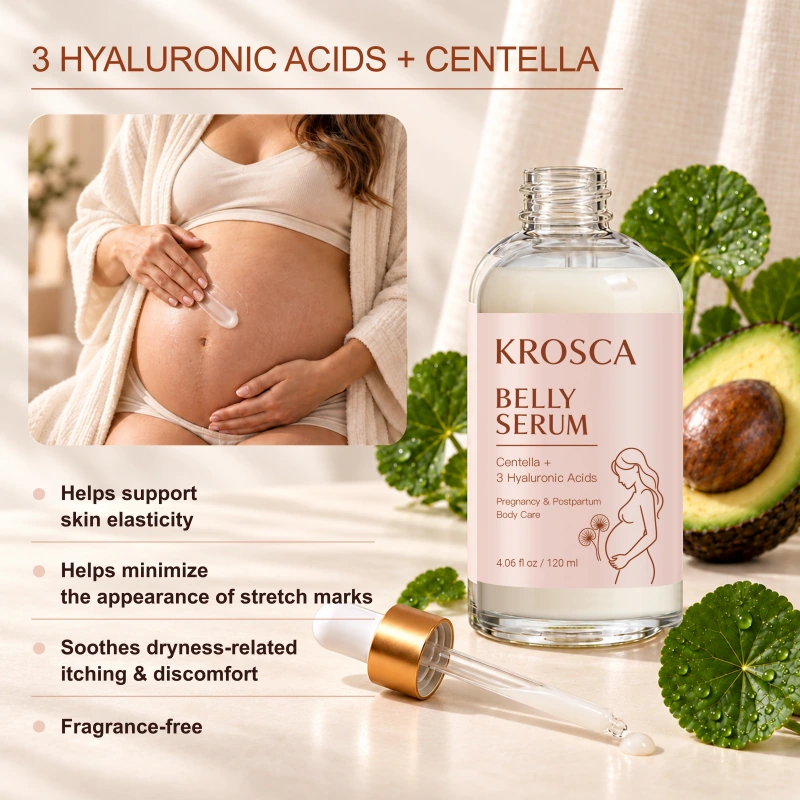
- Hydration, twice a day, on the breasts and the chest. The skin there is thin and stretches fast.
- Fragrance-free. The area is sensitive and becomes more so while breastfeeding.
- A supportive bra that fits the new size. Friction and pressure make irritation worse.
- No scratching, even when it itches.
While breastfeeding
- Apply away from the nipple, or wipe the area before feeding.
- Keep products simple: fragrance-free, no essential oils, nothing the baby will taste.
- If the nipple is cracked or painful, that is a separate problem — see the nipple care article and, if it persists, a lactation consultant.
Do they fade?
Yes, usually more than belly ones. They soften and lose color over the first year, especially if the skin returns closer to its previous size after breastfeeding.
The honest part
No cream prevents them. Hydration makes the skin feel better during the months it is stretching, which is worth doing for its own sake.